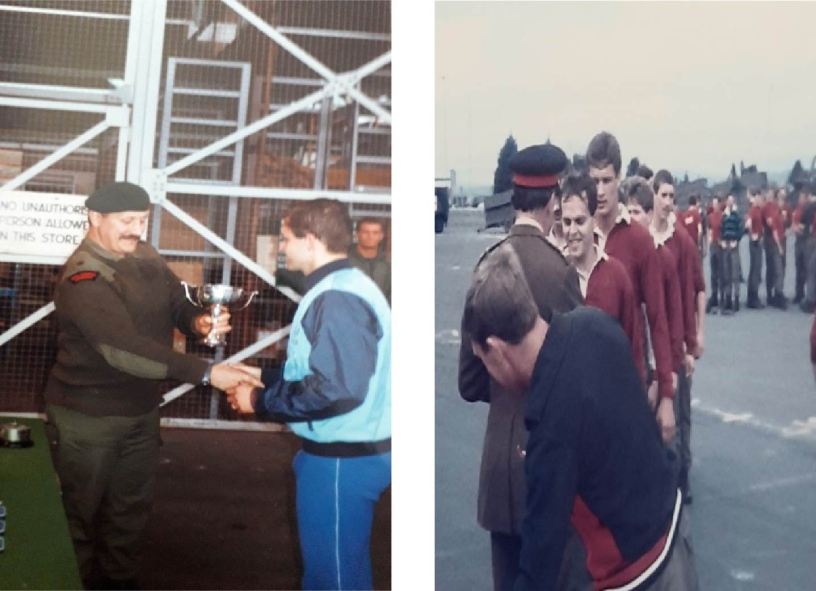
My first career – ‘Added Value’ involved helping units win sporting trophies – which was very important to them.
It is 1990, and I am sitting in a workshop presentation ‘horseshoe’. I am one of twelve SNCOs (Senior Non-Commissioned Officers) at the start of a short management course being held at a Training Depot somewhere in Surrey, England. My success criteria for attending any workshop is that if I can take one new piece of learning away with me then the training session will have been worthwhile.
One of the course leaders is a US Army Officer on secondment and he is the one to open the workshop. Within minutes I have met my success criteria for the whole course! What he began with, and addressed to everyone, will stay with me for the rest of my Army career. It is also something that has driven me in my second career in Social Care. What is it you ask?
He asks us, one at a time, what is the ‘added value’ you bring to your role? Before we have an opportunity to respond he quickly jumps in and follows up his own question with a statement: “Doing a good job is a given – it is what you are paid for. So, what is the added value you bring to your role, the people for whom you are responsible, and your team/unit?”
What is your added value? It has become a question I repeatedly ask myself. What is your unique selling point (USP)? What will be the difference you will make to your organisation and the people you support?
What do I mean by ‘Added Value’?
Adding value means going beyond your job description. Investing more time and effort than is required of doing a job well. Linking your work to specific organisational objectives enables you to focus on the tasks that will have the biggest impact on your team and company’s success.
Adding Value are the skills, talents, and relevant experiences you bring to your job and employer.
Finding your Added Value
Being able to pick up tasks as required, or without being asked, is a trait that many employers value. Showing initiative by continually looking for improvements and concentrating on one goal or skill at a time.
During my first career it often involved sport, whether as a manager, coach, captain, or a participant. In this career my added value has been about delivering leadership training; coaching; mentoring; writing articles; wellbeing/wellness newsletters; diversity awareness projects; carer speaking engagements and social media engagement.
Looking to add value in every post I have held has often involved regularly reinventing myself.
Related: The Art of Reinvention – Leadership in the Raw
Five examples of how ‘Added Value’ has benefitted me in job roles:
- It has helped me to remain competitive, agile, and innovative.
- I am able to demonstrate a strong commitment to my team/organisation.
- It has helped me with my career progress by being able to evidence flexibility towards tasks/change.
- It has supported my career advancement. Being able to explain and signpost to how you have added value to a company will (hopefully) stand you in good stead when it comes to career development.
- The Return on Time Invested (ROTI). Investing additional time on acquiring new skills, knowledge, and expertise. This may involve looking to introduce a new method or skill set for the organisation. My example of this was to set up in-house NVQ assessors for vocational qualifications.
Related: ‘Keeping a Momentum’ The 7th Leadership Lesson I learned – Keeping a Momentum – Leadership in the Raw
‘Added Value’ benefits your team, company/organisation, and your colleagues:
An organisation might be more likely to succeed if it has high performing employees who bring added value because of their talent, knowledge, and skills. We have achieved this over the last 15 years in the company I work for www.dosh.org by surrounding ourselves with talent.
Related: The 3rd Leadership Lesson I learned – Surround yourself with Talent – Leadership in the Raw
Your engagement and commitment energise your team and company to thrive.
Nearly twenty years after the management workshop, I was just days into a new employment when the Chief Executive mentioned to me that during my interview, she was particularly interested in my experiences of designing and gaining an accreditation for a leadership development award (which was not an essential/desirable in the job description) – so this was going to be my added value.
 Leadership in the Raw